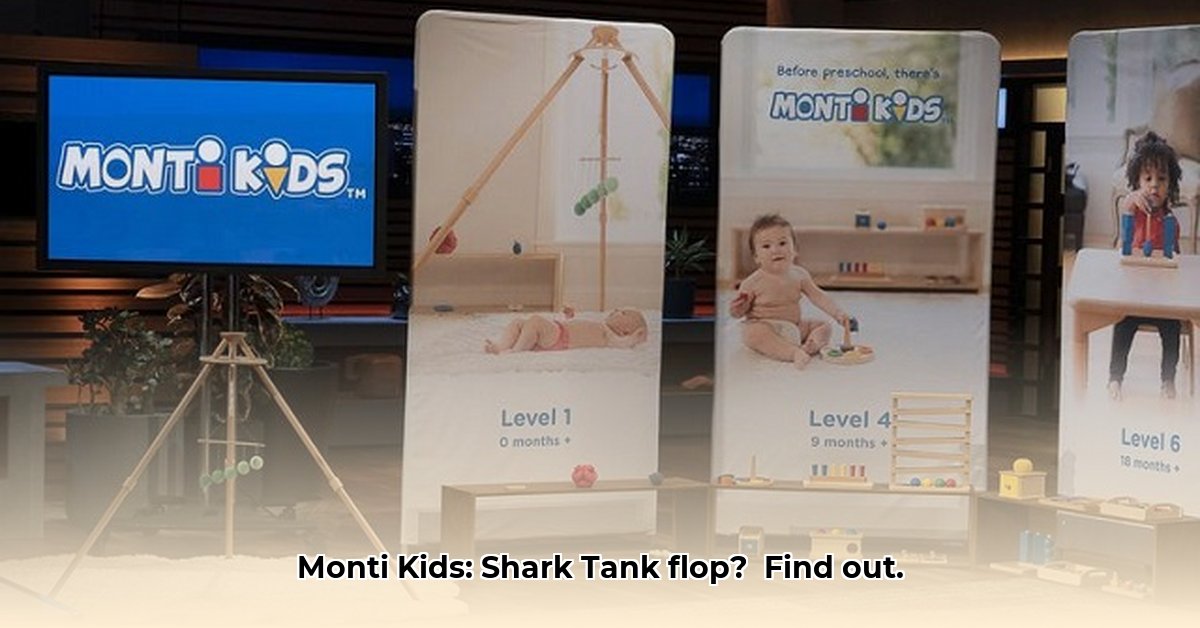
Monti Kids, a Montessori-method educational toy company, captured national attention with a successful appearance on Shark Tank. Securing a substantial investment, the company initially experienced rapid growth. However, this seemingly promising trajectory ultimately ended in failure, leaving Monti Kids with a net worth of zero. For more on failed Shark Tank companies, see this related case study. This case study analyzes the contributing factors to their downfall, offering valuable lessons for entrepreneurs and investors.
Initial Success and Funding
Monti Kids' Shark Tank appearance in 2019 secured a $200,000 investment from Kevin O'Leary, fueling further investment rounds that ultimately totaled $6 million by 2020. Preceding their television debut, Monti Kids already exhibited impressive growth, with monthly revenue increasing at a 20% rate. This early success attracted investors and positioned the company for potentially significant expansion. By 2021, annual revenue exceeded $7 million. Positive press coverage from publications like USA Today and Tiny Beans further amplified their initial success, seemingly solidifying their position in the market.
Factors Contributing to Failure
Despite early success, Monti Kids faced significant challenges that ultimately led to its demise. Several interconnected factors contributed to their downfall:
High Burn Rate and Unsustainable Business Model
Monti Kids operated with a high burn rate, incurring monthly losses of $95,000. Even before their Shark Tank appearance, accumulated losses were around $900,000. This unsustainable financial model was compounded by a pricing strategy that may have been misaligned with market demand. Each toy level cost $125 to produce, while the three-month subscription was priced at $297. This discrepancy significantly limited profitability––a critical oversight that likely hampered long-term viability. Did the high price point effectively cater to their target market, or did it price out a significant segment of potential customers? This is a crucial question to consider.
Mixed Customer Reviews
While some customers praised Monti Kids' innovative approach and educational value, many others expressed concerns about inconsistent product quality. This negative feedback directly impacted customer loyalty and satisfaction––essential factors for a subscription-based model. The mixed reviews highlight the critical importance of maintaining consistent quality control, especially in a market demanding high standards in educational products.
Founder Burnout and Leadership Transition
Founder Zahra Kassam's burnout following a concussion and subsequent stepping down as CEO in August 2020 created significant leadership instability. This transition, occurring during a period of financial strain, undoubtedly exacerbated the company's challenges. The loss of a key leader during a crisis severely impacts a company's ability to adapt and respond effectively.
Competitive Landscape
The educational toy market is highly competitive. Monti Kids struggled to differentiate itself from established players, lacking a unique selling proposition that could effectively capture and retain market share. The inability to establish a compelling competitive advantage significantly hindered their ability to thrive in a saturated market.
Post-Mortem Analysis
Monti Kids' failure stemmed from a confluence of factors. While each individual challenge might have been surmountable, their combined effect proved insurmountable. The unsustainable business model, coupled with negative customer feedback, leadership instability, and intense market competition, created a perfect storm that ultimately led to the company's demise. This highlights the importance of a holistic approach to business management, demanding careful consideration of all aspects of operations and market dynamics.
Actionable Insights and Lessons Learned
Monti Kids' story offers several crucial lessons for entrepreneurs and investors alike:
For Entrepreneurs:
Develop a Lean and Sustainable Business Model: Prioritize profitability and carefully analyze all costs before scaling operations. Thorough market research and financial projections are crucial before product launch.
Prioritize Quality Control and Customer Feedback: Maintain consistent product quality and actively solicit and address customer feedback to enhance customer loyalty and retention.
Build a Strong and Resilient Leadership Team: Plan for leadership transitions and ensure that the team is well-equipped to handle unexpected challenges.
Develop a Strong Unique Selling Proposition (USP): Identify and leverage a clear competitive advantage to stand out in a crowded market.
For Investors:
Perform Rigorous Due Diligence: Assess a company's financial health, business model sustainability, and market position thoroughly before investing.
Monitor Key Performance Indicators (KPIs) Closely: Track critical metrics like burn rate, customer satisfaction, and market share to identify potential problems early on.
Encourage Adaptability and Innovation: Support ventures that demonstrate the capacity for adapting to changing market conditions and evolving customer needs.
Conclusion
Monti Kids' failure, despite initial success on Shark Tank, serves as a potent reminder that even well-funded startups can fail if they lack a sustainable business model, fail to address customer concerns, lack strong leadership, and are unable to establish a clear competitive advantage. By understanding the factors that led to their demise, both entrepreneurs and investors can learn valuable lessons and enhance their ability to navigate the complexities of a dynamic and competitive environment. The story of Monti Kids is not just about a failed business; it is a crucial case study in the critical aspects of successful business management.